


Top 10 AI Startups to Watch in Madison, WI in 2026
By Irene Holden
Last Updated: March 14th 2026
Too Long; Didn't Read
The top AI startups to watch in Madison, WI in 2026 are EnsoData and Elephas, leading in health-tech with innovative solutions that save clinics hundreds of hours monthly and secure major funding like a $55 million Series C round. These startups benefit from Madison's emerging AI hub status, fueled by UW-Madison talent and a lower cost of living, making them key players in the region's growing ecosystem.
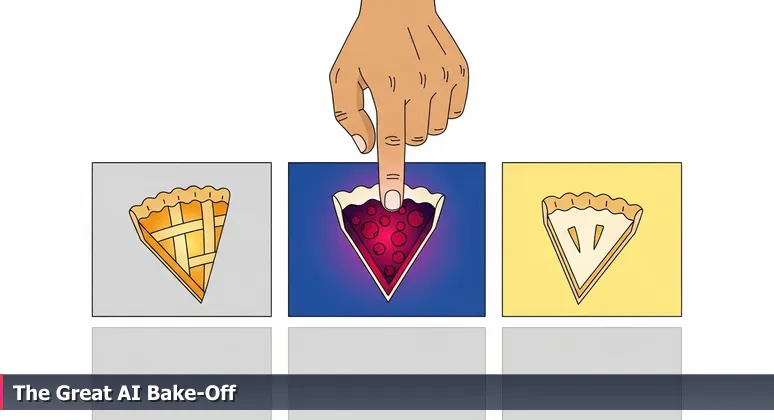
Every summer at the Dane County Fair, judges face a wonderfully difficult task: crowning a winner from a table of perfect pies. In 2026, assessing Madison's AI startup scene evokes the same delicious dilemma. The region has been officially recognized as an emerging center for AI economic readiness, a status fueled by a top-tier talent pipeline from the University of Wisconsin-Madison.
This fertile ground is more than academic. A cost of living roughly 25% lower than San Francisco allows capital to stretch further, while industry anchors from Epic Systems to Exact Sciences provide a steady stream of expertise and commercial opportunity. The ecosystem's strength is reflected in homegrown success stories, like rewards platform Fetch, which by 2026 stood as Madison's only unicorn startup having raised over $1.5 billion.
This isn't just a ranking of companies; it's a forecast of which innovations have the right mix of ingredients to win the blue ribbon. The following startups represent the most promising flavors baked in this kitchen, each with a unique recipe combining groundbreaking tech, seasoned teams, and Midwestern pragmatism. They are the direct result of initiatives like the UW-Madison partnership with Microsoft and TitletownTech to accelerate AI-driven discovery, proving that the recipe for a thriving tech hub is being perfected right here in Madison.
Table of Contents
- The Great Madison AI Bake-Off
- EnsoData
- Elephas
- DataChat
- Strudel AI
- Agrograph
- Voximetry
- Understory
- Ubicept
- Moxe Health
- TechComb
- Frequently Asked Questions
This comprehensive guide for AI professionals in Madison provides all the details.
EnsoData
In the overburdened healthcare sector, sleep disorder diagnosis represents a classic bottleneck. It relies on clinicians to manually score hours of polysomnography data - a tedious process prone to human error. EnsoData's AI recipe tackles this directly, baking advanced machine learning into its FDA-cleared EnsoSleep software to automate the identification of neural and cardiopulmonary patterns.
The traction is undeniable. Their platform is reported to save sleep centers hundreds of hours per month, directly addressing clinical burnout and inefficiency. This high utility has attracted substantial backing, including from HealthX Ventures and over 25 other investors, making it a frequently cited success in Madison's health tech landscape.
EnsoData exemplifies the "pragmatic AI" solving acute, expensive problems in established systems. As noted in analyses of the local ecosystem, such applied health AI companies thrive by turning academic research into products that improve both patient care and clinic efficiency. Their success demonstrates a clear path to scale within Madison's robust healthcare network, potentially leading to acquisition by a larger medical device or health IT conglomerate seeking integrated diagnostics.
Elephas
Predicting how an individual's cancer will respond to immunotherapy has often been more art than science, leading to ineffective treatments and lost time. Spun out of UW-Madison research, Elephas employs a breakthrough recipe: a combination of live-cell imaging and AI. Their platform treats a patient's live tumor biopsy with various therapies, using artificial intelligence to analyze cellular responses and predict the most effective treatment.
The company moved from concept to clinical reality with impressive velocity, fueled by a significant $55 million Series C funding round in early 2025. This capital infusion, noted in a Purpose Jobs analysis of top tech companies, was earmarked for expanding its Madison lab network and accelerating commercialization. They have progressed beyond validation into real-world use at leading cancer centers.
Elephas operates at the white-hot intersection of AI and biotech, a sector where Madison excels. As a leader among top Madison AI companies, its growth underscores the region's unique capacity to foster "deep tech" life science ventures that require both wet-lab expertise and advanced computational power. Watch for potential IPO filings as they scale and pursue additional regulatory clearances in the booming targeted-therapy market.
DataChat
The barrier between business decision-makers and powerful data insights has traditionally been technical expertise. DataChat's recipe for democratization is "conversational intelligence." Founded by UW-Madison Computer Science professor Rogers Jeffrey Leo John, its platform allows users to perform sophisticated analytics and build machine learning models simply by typing questions in natural language, as if chatting with an expert.
With approximately $29 million in funding, DataChat is a leader in the no-code AI movement. Its core differentiation is an all-in-one environment that handles the entire data workflow, making powerful analytics accessible to non-technical business analysts. This positions it strongly within Madison's shift toward deep-tech AI in sectors like conversational intelligence.
DataChat exemplifies how Madison's academic excellence directly seeds transformative commercial ventures. As a horizontal SaaS platform, its market expansion potential is massive across all industries. The key metric for their continued rise will be enterprise adoption within Fortune 500 companies seeking to empower teams with data, proving that groundbreaking software can emerge far from coastal hubs.
Strudel AI
For software companies, reactive technical customer support drains precious engineering resources from core product development. Strudel AI's recipe builds autonomous AI agents that resolve issues directly within tools like Slack and Zendesk. Its AI triages, diagnoses, and fixes problems by accessing documentation and past tickets, even executing safe code commands.
The value proposition is powerfully quantified. CEO Kristin Isaac states the platform can "resolve technical problems 65% faster while reducing engineering time spent on support by 20%." This traction earned Strudel AI first place in the IT category of the Wisconsin Governor’s Business Plan Contest. As reported by WPR, the win came with a commitment to grow its team locally, tapping into University of Wisconsin talent.
Strudel AI shows Madison can produce category-defining enterprise software beyond the region's traditional health-tech focus. As a B2B SaaS play, it's on a path to become vital infrastructure for any tech company with a complex product. Watch for major partnerships with platform companies, proving that ambitious AI solutions for global software challenges are being baked right in Wisconsin.
Agrograph
Assessing crop yield risk for insurance and lending remains inefficient, often relying on outdated models that fail to account for micro-climates and modern practices. Agrograph's vertical AI platform tackles this by ingesting satellite, IoT, and field-level data to create hyper-local predictive models that determine actual agronomic risk, creditworthiness, and sustainable practice verification.
Positioned at the nexus of ag-tech, fintech, and climate tech, Agrograph addresses a multi-billion dollar market. Its models are critical for insurers and lenders seeking to accurately price risk in an era of increasing climate volatility. The company is backed by seed to Series A investors focused on sustainability, cementing its role as a key player in Madison's growing climate intelligence cluster noted in ecosystem reports.
Agrograph's trajectory is tightly linked to the booming market for climate-risk analytics. As emphasized in analyses of Madison's startup surge, the region's agricultural roots are evolving into high-tech, data-driven food systems innovation. A strategic acquisition by a major global reinsurer or crop insurance giant is a likely exit, highlighting how local startups are building essential tools for global challenges directly from the heartland.
Voximetry
In targeted radiopharmaceutical therapy, determining the precise, patient-specific dosage of radioactive drugs is incredibly complex, risking under-treatment or harmful side effects. Founded by researchers from the renowned UW-Madison Department of Medical Physics, Voximetry's AI recipe uses high-speed computational modeling to simulate how radioactive particles travel within a patient's unique anatomy, optimizing personalized treatment plans.
As a recipient of competitive SBIR Advance grants and private venture capital, Voximetry is commercializing cutting-edge research from the university's pipeline. They operate in the booming targeted radiotherapeutics market, partnering with pharmaceutical companies to make next-generation cancer drugs safer and more effective. Their work exemplifies the kind of deep-tech life science ventures spun out from UW-Madison that thrive in the local ecosystem.
Voximetry is a classic "picks-and-shovels" play in the oncology gold rush. Rather than developing a new drug, they make existing and emerging therapies smarter through precision AI. This approach has garnered support through programs like the SBIR grants awarded to Madison-area businesses. Watch for potential licensing deals with major pharma firms or acquisition by a medical imaging giant, showcasing Madison's strength in bridging advanced physics, medicine, and artificial intelligence.
Understory
Traditional weather data from satellites and distant stations often fails to capture hyper-local conditions - like a hailstorm devastating one farm but sparing its neighbor. Understory's recipe deploys dense networks of proprietary, ground-level sensors that measure hail, wind, rain, and temperature, with AI models analyzing this high-fidelity data for precise risk assessments.
Following a successful 2025 funding round, Understory secured a long-term licensing deal with a national reinsurer, a strong signal of product-market fit. In an era of increasing weather volatility, their ground-truth data is becoming an indispensable asset for accurately pricing climate risk for property and agricultural insurers. This positions them as a vital part of the "emerging center" for AI and climate intelligence that defines Madison's tech evolution.
Understory's business model strategically evolves from hardware sales to high-margin data licensing and analytics. As identified in analyses of top Wisconsin tech companies to watch, they are a prime candidate to become a standalone public company as the market for climate analytics expands, or an attractive acquisition for a global insurance data firm. Their growth from a Madison base demonstrates how sensor-driven AI can create essential infrastructure for global industries grappling with environmental change.
Ubicept
Conventional computer vision systems falter in extreme conditions - very low light, high-speed motion, or harsh weather - limiting autonomous robots and security systems. A spinout from UW-Madison, Ubicept revolutionizes perception at the hardware level. Co-founded by researchers Sebastian Bauer and Tristan Swedish, the company develops novel image sensors and co-designed algorithms that capture and process visual information in fundamentally new ways.
Ubicept's technology represents the deep-tech frontier of machine perception. As highlighted among the top AI companies emerging from Madison, their solution isn't just software; it's a hardware-software fusion that creates a durable competitive moat. This approach is backed by early-stage venture capital and robust local angel networks, fueling development for applications in robotics, industrial automation, and defense.
By teaching machines to see the unseeable, Ubicept embodies Madison's strength in foundational technology research. Their likely path involves strategic partnerships with leading manufacturers of autonomous systems, such as warehouse robots or agricultural equipment. They represent the kind of enabling technology that could attract acquisition interest from a semiconductor leader seeking to own the full perception stack, proving that world-class sensing innovation thrives in the Midwest.
Moxe Health
The exchange of clinical data between healthcare providers and payers is a tangled web of incompatible formats and manual processes, driving up administrative costs. Moxe Health's recipe uses generative AI and natural language processing (NLP) to automate these workflows, transforming unstructured clinical notes into the standardized, coded data required for billing and quality reporting.
To accelerate growth, Moxe acquired a data analytics firm in 2025, a move that expanded its capabilities during a period of significant activity in the local startup scene. As noted in coverage of the 2025 Early Stage Symposium, this pragmatic approach to scaling is characteristic of Madison's health tech ecosystem. Led by CEO Dan Deveny, the company simplifies one of healthcare's most persistent and expensive headaches.
Positioned as a critical interoperability layer, Moxe Health exemplifies the "pragmatic AI" solving real business problems in Madison's robust healthcare sector. Its secure, AI-driven approach reduces overhead and errors in a highly regulated environment, making it an attractive asset. As a leader among top Madison software startups, Moxe represents a prime acquisition target for large health IT platforms or insurance providers aiming to own the data ingestion pipeline, demonstrating the commercial value of streamlining healthcare's backend.
TechComb
Small and mid-sized manufacturers often struggle to adopt machine vision for quality control due to the need for expensive, specialized integrators and hardware-locked solutions. TechComb's recipe offers a B2B toolkit that allows automation engineers to quickly create hardware-agnostic machine-vision models, simplifying training and deployment without requiring a team of AI experts.
A graduate of the gener8tor Madison 2024 cohort, TechComb embodies the accelerator's focus on scalable, practical technology. With backing from gener8tor and local angel groups, they empower the long tail of American manufacturing, enabling sales engineers to rapidly prototype visual inspection solutions for legacy factories. This addresses a clear need in the Industry 4.0 adoption wave.
TechComb's growth is directly tied to manufacturing reshoring and broader automation trends. As they build a marketplace of pre-trained models for common industrial tasks, they could evolve into a standalone platform or become key enabling technology for a major industrial automation player. Their presence highlights the diversity of Madison's AI ecosystem, proving that impactful tools for physical industries are being developed alongside advanced health and software solutions.
Frequently Asked Questions
How did you rank the top AI startups in Madison for 2026?
We evaluated startups based on their unique AI 'recipes' - like judging a pie bake-off - focusing on groundbreaking tech, seasoned teams, and market traction. Key factors included funding milestones, such as Elephas' $55 million Series C, and their ability to solve real-world problems in Madison's key industries, from healthcare to agriculture.
Why is Madison, WI becoming an AI hub worth watching compared to other cities?
Madison offers a lower cost of living than coastal tech hubs, a strong talent pipeline from UW-Madison, and proximity to major employers like Epic Systems. This has earned it recognition as an emerging center for AI economic readiness, making it a cost-effective and vibrant place for startups to scale and innovate.
Are these startups all focused on healthcare, given Madison's biotech reputation?
No, while healthcare AI is strong with startups like EnsoData, the list spans diverse sectors. For example, Agrograph tackles agriculture risk, and Strudel AI automates technical support, showcasing Madison's broad AI application across industries from enterprise software to climate tech.
What kind of funding have these startups secured, and is that why they made the list?
Funding varies, with DataChat raising about $29 million and Understory securing a reinsurer deal, but we balanced this with innovation and impact. For instance, TechComb's gener8tor backing shows growth potential in manufacturing, not just capital, highlighting Madison's supportive ecosystem for scaling ventures.
How can someone pursuing an AI career get involved with these startups in Madison?
Many startups are hiring locally, and Madison's lower living costs make it attractive for career growth. Networking through UW-Madison events or leveraging resources like the Wisconsin Governor's Business Plan Contest can open doors, as companies like Strudel AI commit to expanding their Madison teams.
Discover the top 10 tech jobs that don't require a degree in Madison, WI in 2026 for career seekers.
For a detailed look at Madison's cybersecurity job market in 2026, check out this article.
Find out where AI talent is in high demand in Madison beyond big tech for the coming year.
Learn about the top 10 highest paying tech companies in Madison, WI in 2026 to plan your career.
Discover the leading incubators for tech startups in Madison in 2026 to accelerate your growth.

Irene Holden
Operations Manager
Former Microsoft Education and Learning Futures Group team member, Irene now oversees instructors at Nucamp while writing about everything tech - from careers to coding bootcamps.