








Top 10 AI Startups to Watch in Modesto, CA in 2026
By Irene Holden
Last Updated: March 16th 2026
Too Long; Didn't Read
Agtonomy and Monarch Tractor lead the top AI startups to watch in Modesto in 2026, with Agtonomy securing $32.8 million to automate farm equipment and Monarch Tractor raising $133 million for electric autonomous tractors, capitalizing on the Central Valley's lower costs and ag-tech focus. These startups exemplify Modesto's shift towards practical AI in agriculture and logistics, making it a key hub for innovation beyond Silicon Valley.
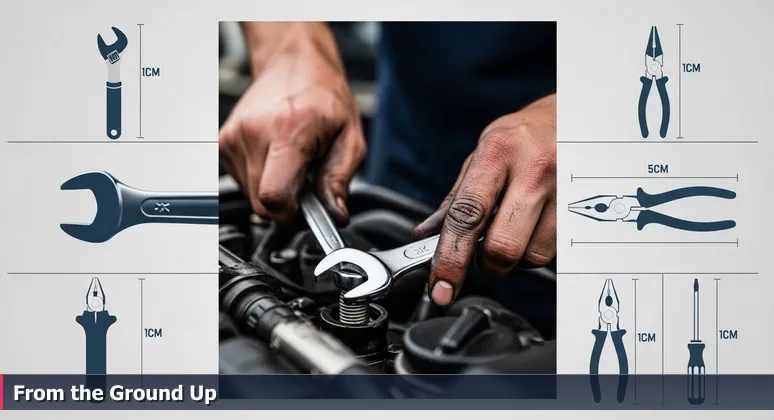
The most important innovation doesn't happen on a showroom floor. It happens with your hands deep in the engine, covered in the grease of a real, grinding problem. In 2026, Modesto and the Central Valley are leading a "quiet revolution" of practical AI that gets its hands dirty solving core challenges in agriculture, logistics, and community needs.
Driven by proximity to the world's largest agricultural laboratory, a lower cost of living than the Bay Area, and strong local logistics corridors, the region's advantage is tangible impact over hype. This movement is fostered by local hubs like the Central Valley AI Innovation Forum at Modesto Junior College, which connects startups with the industries they serve. As experts note, the focus has shifted decisively from broad possibility to niche, high-value practice.
Stanford AI experts highlight that 2026 is the year AI transitions to applications that "augment human capabilities," a trend perfectly suited to the Central Valley's hands-on economic strengths. Stanford HAI
This is reflected in serious investment, with startups like Agtonomy and Monarch Tractor raising over $165M combined. This capital fuels a transformative shift, building solutions tested daily in one of the world's most demanding real-world laboratories - the fields and supply chains of the Valley itself.
The future of impactful AI is being built not with polish, but with purpose, from the ground up. It’s a future that respects the essential machinery of local industry, getting its hands covered in the productive grease of problem-solving.
Table of Contents
- The Quiet AI Revolution in the Central Valley
- Agtonomy
- Monarch Tractor
- Verdi
- Farm-ng
- Blue River Technology
- Carbon Robotics
- Ceres Imaging
- InnerPlant
- Yüda
- Sisbro Innovation
- Building the Future with Purpose
- Frequently Asked Questions
If you're planning for 2026, read about how to begin an AI career in Modesto.
Agtonomy
Agtonomy tackles the grinding problem of agricultural labor shortages and operational inefficiency head-on by converting existing farm equipment into autonomous, sustainable platforms. Its unique approach is a full-stack "service-as-a-software" solution centered on vertical AI for computer vision and robotics, integrating directly with tractors for turnkey autonomy.
"We are accelerating AI-first autonomy for agriculture," says co-founder Tim Bucher, a veteran of Apple and HP, emphasizing the hands-on integration with real machinery. Forbes
This practical model is backed by serious capital, with approximately $32.8M in a Series A round led by Autotech Ventures. Key pilot programs are already running in Central Valley vineyards, providing the essential real-world testing ground that defines the region's advantage. This proximity to vast farms allows for rapid iteration that purely software-focused startups cannot match.
Agtonomy is a prime example of the "quiet revolution" in applied AI. Its trajectory points toward a strategic acquisition by a major equipment manufacturer or a logical expansion into the logistics automation that flows along the I-5 and Highway 99 corridors, diversifying from its agricultural roots into another of the Valley's core industries.
Monarch Tractor
Monarch Tractor directly addresses the dual challenge of decarbonizing agriculture and automating high-skill operations. Its solution is the world's first fully electric, driver-optional smart tractor, combining electrification with autonomous AI to act as both a robot and a mobile power grid.
"We are fundamentally re-imagining the tractor for the 21st century," says founder Praveen Penmetsa, highlighting its role in data-driven, sustainable farming that meets both economic and environmental demands.
Backed by the most substantial capital on this list - a massive $133M Series C round in 2024 - Monarch is rapidly scaling production. Its deployments in Central Valley vineyards position it not just as farm equipment, but as critical infrastructure for a more resilient agricultural economy.
This positions Monarch Tractor for a potential IPO or a landmark partnership with a global energy company interested in its vehicle-to-grid technology. Its story exemplifies the powerful convergence of sustainability and automation, two forces defining the future of the Central Valley's core industry.
Verdi
In the Central Valley, water is not just a resource; it's the lifeblood of the economy. Verdi attacks the crippling problem of water scarcity with intelligent, plant-level irrigation management, moving beyond passive monitoring to active, AI-driven control.
Its system uses MLOps to manage fleet-wide precision irrigation, controlling water delivery at a per-plant level in real-time and scaling to manage thousands of acres. This represents a shift from diagnostics to direct, climate-adaptive action, a critical evolution for a region where every drop counts. This technology is becoming essential infrastructure for the Valley's future.
Following a successful Seed round led by AgFunder and significant revenue growth from 2025-2026 pilots in Stanislaus County almond orchards, Verdi has proven its value on the ground. Its practical impact on the region's most critical challenge makes it a clear acquisition target for large irrigation technology firms or water districts seeking a technological edge.
Farm-ng
Farm-ng democratizes access to agricultural AI by making robotics and intelligent automation affordable for small-to-medium sized farms, a segment often overlooked by larger equipment manufacturers. Its solution is the "Amiga," a modular, AI-powered micro-tractor designed for versatility and accessibility.
The key differentiator is an open-source-friendly AI stack that allows farmers and developers to build custom "apps" for specific tasks like precise weeding or hauling. Founded by Ethan Rublee, who brings expertise from Google and Industrial Perception, this platform empowers users to become innovators themselves. This approach fosters a community-driven ecosystem rather than a closed, proprietary system.
With hundreds of units deployed and popularity among Turlock-area organic farmers, Farm-ng's traction is solid. Its "iPhone of tractors" model positions it for a unique growth path, potentially building a thriving marketplace of third-party AI applications that could attract venture funding focused on platform-based business models, much like those transforming other non-tech industries.
Blue River Technology
Now a unit of John Deere, Blue River Technology represents the pinnacle of applied, vertical AI focused on a single high-value task: precise, chemical-free weed control. Its "See & Spray" technology uses deep learning computer vision to distinguish crops from weeds in real-time at speeds over 15 mph, spraying only the unwanted plants.
This solves the critical dual problem of reducing herbicide use and combating weed resistance, a major concern for Central Valley growers from Riverbank to Ceres. The system embodies the shift from blanket solutions to hyper-precision, reflecting the industry's move toward sustainable intensification.
As a late-stage enterprise unit with John Deere's massive R&D and distribution network, Blue River is less a startup to watch and more a benchmark for success. Its deep integration into new equipment fleets demonstrates how foundational specialized AI has become for industry giants, setting a high bar that other startups in the evolving AI landscape must either meet or creatively disrupt.
Carbon Robotics
Carbon Robotics tackles weed elimination with a distinctly physical approach, using high-power, computer-vision-guided lasers to thermally destroy weeds without chemicals or soil disruption. This offers a direct solution to both environmental concerns and increasing regulatory pressures in California farming.
The company's LaserWeeder technology has gained significant traction, evidenced by a $43M Series C funding round in late 2025 and a growing backlog of orders from major Central Valley growers. Its proven ROI and clear value proposition in a market demanding sustainable alternatives position it strongly for scaled manufacturing and wider adoption.
As a leader in precision agriculture technology, Carbon Robotics is a prime candidate for further growth equity or an acquisition by a major agricultural chemical company seeking to diversify its portfolio into physical, non-chemical solutions. Its success underscores the market's readiness for AI-driven tools that offer tangible, immediate benefits.
Ceres Imaging
Ceres Imaging solves the critical need for early detection of crop stress, nutrient deficiencies, and accurate yield prediction. Its approach utilizes high-resolution aerial imagery paired with proprietary AI models to provide predictive analytics that can identify issues before they become visible to the human eye, enabling proactive farm management.
As one of the most mature entities in the sector, Ceres Imaging has secured Series C funding led by giants like Bunge Ventures. Its technology currently monitors millions of Central Valley acres, amassing deep, multi-season datasets that become more valuable with each harvest cycle. This vast repository of agricultural intelligence is a formidable and defensible asset.
The company's clear trajectory points toward an IPO or a strategic sale to a commodity trading, insurance, or agribusiness firm hungry for predictive yield data. Its evolution from a monitoring service to an essential data infrastructure provider exemplifies how AI creates new, high-value layers within traditional industries.
InnerPlant
InnerPlant tackles the inherent latency and cost of traditional crop scouting by flipping the paradigm of data collection. Instead of deploying external sensors, it uses biological AI - engineering plants themselves to produce optical signals (fluorescence) when stressed, which AI-powered sensors then read from above.
"The plant becomes the sensor," explains co-founder Shely Aronov, highlighting how this approach fundamentally changes agricultural data collection from periodic sampling to continuous, direct communication from the crop.
This frontier technology is backed by a $16M Series A from John Deere, signaling strong belief in its potential. Extensive test fields in Stanislaus and Merced counties serve as the critical proving ground, allowing the technology to be validated in the heart of the world's most productive agricultural region.
If successful at scale, InnerPlant could transition to a high-margin, IP-driven business model, licensing its engineered seed technology to global seed producers. It represents the cutting edge of AgTech innovation, showcasing how the Central Valley serves as a laboratory for fundamentally new approaches to age-old farming challenges.
Yüda
Yüda addresses a common frustration for local businesses: advanced AI tools for customer engagement are typically designed for and accessible only to large corporations. This startup bridges that gap by building hyper-local conversational AI and NLP models specifically trained on Central Valley business datasets and regional dialects.
This allows downtown Modesto merchants, restaurants, and service providers to automate customer service and marketing with a tool that genuinely understands local context, seasonal nuances, and community references. Led by local tech organizers Daisy Mayorga and Courtney Oribello, the company's strength is its embedded community roots, ensuring the technology solves real problems faced by Valley enterprises.
Funded by regional angel groups, Yüda exemplifies the practical, community-focused application of AI. Its trajectory points toward becoming the essential AI platform for Main Street businesses across the region, with potential to expand into local government communication systems, effectively becoming a key piece of civic tech infrastructure that strengthens the entire community's digital resilience.
Sisbro Innovation
Sisbro Innovation addresses persistent educational gaps by making complex STEM concepts accessible for K-12 students in the Central Valley. Its unique approach uses generative AI to create customized, digestible visual and textual instructional content that aligns with local curricula, focusing on practical tools for teachers rather than broad, impersonal ed-tech platforms.
Co-founded by Kathryn Kim Ramos, the startup has forged strong, essential partnerships with the Stanislaus County Office of Education, ensuring its tools are directly responsive to classroom needs. This local integration is facilitated by the growing regional AI ecosystem that connects innovators with public institutions.
Operating with early-stage seed funding and bootstrap-led growth, Sisbro’s community-focused model proves that impactful AI doesn't require massive capital upfront. Its success in meeting a critical regional need could attract specialized impact investment or lead to an acquisition by a larger educational publisher or software company seeking to enhance its AI-generated content capabilities for diverse student populations.
Building the Future with Purpose
The engine of AI innovation is no longer humming exclusively in Silicon Valley. In 2026, it’s also rumbling through the almond orchards of Stanislaus County, the vineyards near Modesto, and the downtown shops seeking a digital edge. The ten startups profiled here exemplify the Central Valley's decisive advantage: a relentless focus on solving tangible, grinding problems with specialized AI, tested daily in one of the world's most demanding economic laboratories.
This is the "quiet revolution" of practical technology, driven by the region's unique assets - proximity to immense agricultural and logistics operations, a lower cost of living that fosters experimentation, and a community ethos that values utility over hype. The combined investment of over $165 million in companies like Agtonomy and Monarch Tractor signals a profound shift from speculative potential to deployed practice, exactly the transition industry observers predicted for this period.
The future is not being built with polish, but with purpose. It’s being built by teams willing to get their hands covered in the productive grease of real systems - from irrigation valves and tractor engines to classroom curricula and main street storefronts. This is the authentic, ground-up transformation that happens when technology finally engages deeply with the essential machinery of our world.
Frequently Asked Questions
Why should I pay attention to AI startups in Modesto for 2026?
In 2026, AI is shifting to practical, niche applications that solve real-world problems, which aligns perfectly with Modesto's strengths in agriculture and logistics. This trend, driven by the region's lower cost of living and proximity to major employers, makes it a key hub for innovative startups.
What industries are these AI startups focused on?
They primarily target agriculture, logistics, and community needs. For example, startups like Agtonomy and Monarch Tractor automate farming, while Yüda helps local Modesto businesses with AI-driven customer tools.
How does Modesto's location benefit AI startups compared to Silicon Valley?
Modesto offers a lower cost of living than the Bay Area, making it affordable for talent and operations. Its access to Central Valley farms and logistics corridors like I-5 allows for real-world testing and deployment close to major employers like E. & J. Gallo Winery.
Are there any AI startups in Modesto that aren't just about agriculture?
Yes, startups like Yüda focus on supporting local businesses with conversational AI, and Sisbro Innovation uses generative AI for K-12 education in Stanislaus County. This diversity shows AI addressing broader community needs in the Central Valley.
What kind of funding have these startups received to date?
Many have secured significant investment, such as Monarch Tractor's $133M Series C and Carbon Robotics' $43M Series C. This funding reflects confidence in their technologies and Modesto's growing role in AI innovation.
Read the complete guide to Modesto's 2026 AI community scene for insights on growth.
This article provides a complete breakdown of 2026 AI salary benchmarks in Modesto by role and experience level.
In the Central Valley, find Modesto's free tech training options detailed in this article for 2026.
Plan your finances with an analysis of budgeting for tech careers in Modesto in 2026, including local job markets.
This guide to AI career opportunities in Modesto in 2026 ranks companies by their regional impact.

Irene Holden
Operations Manager
Former Microsoft Education and Learning Futures Group team member, Irene now oversees instructors at Nucamp while writing about everything tech - from careers to coding bootcamps.