






Top 10 AI Startups to Watch in Tyler, TX in 2026
By Irene Holden
Last Updated: March 31st 2026
Too Long; Didn't Read
FireAI and zdSCADA are the top AI startups to watch in Tyler, TX in 2026, focusing on local challenges like wildfire detection and energy optimization with UT Tyler support. FireAI applies AI trained on East Texas forests to combat wildfires after winning competitive grants, while zdSCADA enhances legacy energy systems with predictive AI, reflecting Tyler's growth as a practical AI hub leveraging Texas advantages.
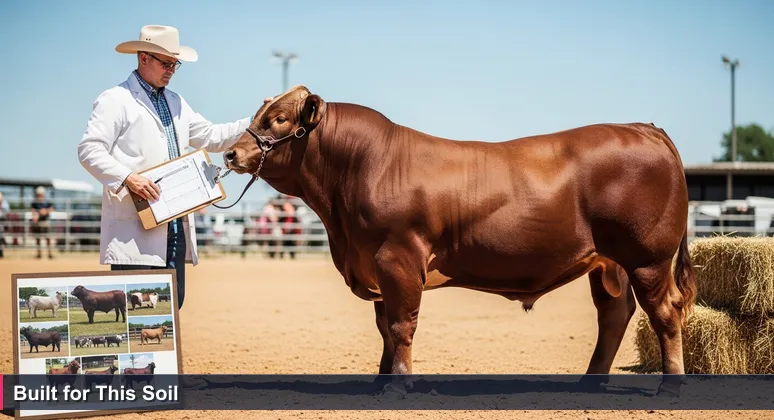
The most important evaluation at any East Texas fair doesn't happen in the grandstands. It happens in the dusty pens, where judges look for more than just ribbons - they look for resilience built for this specific soil. In 2026, the same discerning eye is needed to assess the burgeoning AI scene in Tyler, TX, where success is measured by a venture's fitness for the local terrain, not just flashy technology.
The startups emerging from the Piney Woods are pragmatic, solving urgent challenges for industries from energy to healthcare that fuel the regional economy. This growth is anchored by institutions like the University of Texas at Tyler (UT Tyler) and its ETX Launchpad program, which provides direct support to turn academic research into commercial pilots. As noted in a recent Yahoo Finance report, UT Tyler actively encourages AI partnerships with local businesses, bridging academic research and market needs.
This ecosystem is buoyed by powerful Texas advantages: no state income tax, a lower cost of living, and strategic positioning near the Dallas-Fort Worth tech corridor. The result is a new breed of "agentic" AI startups, judged not by generic Silicon Valley metrics, but by their rootedness in the unique soil of East Texas.
Table of Contents
- Introduction to Tyler's Resilient AI Scene
- FireAI
- zdSCADA
- Agri-Eye
- Tyler A.I. Solutions
- Easy-Med
- Quanti-fry
- i-Her
- Flapping Airplanes
- CRK Racing
- Teragonia
- Conclusion: Judging Resilience by Local Fit
- Frequently Asked Questions
This article offers a comprehensive guide to starting an AI career in Tyler in 2026.
FireAI
Founded by UT Tyler alumni Matthew Castillo and Rafael Reyes, FireAI tackles a critical local threat: devastating wildfires in East Texas's unique, heavily forested topography. The startup leverages computer vision and thermal imaging AI specifically trained on the region's dense woodlands, moving beyond generic models to create a solution built for the Piney Woods.
Its approach exemplifies the bridge from academic research to urgent public need, operating from the UT Tyler Research Park with support from the university's incubator. The team's progress is marked by significant early validation, having won $10,000 at the regional iLaunch Competition and being named a Top 50 finalist in the 2026 Baylor New Venture Competition.
This team "showcases the strength of East Texas engineering and tech talent on a statewide stage" - Brandon Reynolds, Director of ETX LaunchPad.
As detailed in the Panola Watchman, FireAI is now transitioning from prototype to pilot deployments with local municipalities. With immediate public-sector product-market fit, the company represents a resilient investment, poised for county and state contracts and potential acquisition by larger disaster-response technology firms.
zdSCADA
In the heart of Texas energy country, zdSCADA addresses a costly industrial challenge. Legacy SCADA systems across the Permian and East Texas basins collect data but lack predictive intelligence, leading to frequent, unplanned downtime. Instead of replacing existing hardware, this startup adds an AI-driven "intelligence layer" on top for predictive maintenance and optimization.
This deep-integration approach, built by local industrial veterans, ensures faster adoption in a conservative sector. The strategy has proven successful, earning zdSCADA recognition as a top-ranked "Software & Data" startup in Tyler. According to StartupBlink's 2026 rankings, the company holds a high regional score of 126, indicating strong traction and visibility.
With a significant existing footprint in the region's energy sector, zdSCADA is positioned in a strong growth phase, likely between Series A and B funding. It capitalizes directly on the booming "Industrial AI" market and represents a classic acquisition target for industrial automation giants like Siemens or Schneider Electric seeking to modernize their offerings for the critical Texas energy market.
Agri-Eye
Spun out of the UT Tyler Center for Robotics and Intelligent Systems (CeRIS), Agri-Eye tackles the labor-intensive challenge of crop health monitoring in Tyler's massive commercial nursery industry and large-scale agriculture. Its solution combines multispectral scanning with edge-intelligent robotics deployed on UAVs, providing real-time, in-field analysis for precise water, pest, and nutrient interventions.
This represents vertical AI built for the backbone of the local economy. The company's development is supported by substantial non-dilutive funding, including federal grants from the USDA and a UT System STAR Award. As part of the active funded projects at UT Tyler CeRIS, Agri-Eye is actively transitioning from university research to commercial pilots.
What makes Agri-Eye a startup to watch is its vision for the next evolution in autonomous farming: the "Agri-Swarm" drone fleet concept. This positions the company for significant venture capital interest from ag-tech funds and potential partnerships with major East Texas nurseries before expanding into row-crop agriculture across the Great Plains.
Tyler A.I. Solutions
Rebranded from a successful local telecom service, Tyler A.I. Solutions leverages deep, existing roots in the East Texas business community to address a common problem: small to mid-sized businesses (SMBs) are eager for AI but lack technical expertise. The company’s model is consultative and boots-on-the-ground, focusing on "agentic workflows" that optimize operations rather than replace jobs.
This practical approach is built on a formidable foundation: over 5,000 clients served in its previous iteration, providing a built-in customer base to transition toward AI tools. The company is seed-stage and primarily self-funded with local angel support, as noted in its Yelp business profile.
"The rate at which businesses are assessing and adapting AI to better service their customers and streamline their operations is skyrocketing." - Christophe Trahan, Executive Director of the Palestine Economic Development Corporation.
As highlighted in a Yahoo Finance report on local AI partnerships, this existing trust and local presence are key competitive advantages. The startup is poised to become the essential AI integrator for the regional SMB market, generating stable, recurring revenue by solving tangible, everyday business challenges.
Easy-Med
Easy-Med addresses a critical constraint in rural healthcare, such as the systems operated by Tyler's CHRISTUS Trinity Mother Frances: harnessing data from a growing array of medical devices while maintaining strict patient privacy and operating with limited connectivity. Developed at a UT Tyler research site, its solution uses specialized Natural Language Processing and security frameworks designed for these specific settings.
The startup orchestrates fragmented data from the "Internet of Medical Things" (IoMT) with built-in privacy assurance, turning device outputs into actionable clinical insights without compromising compliance. This focus on rural-ready AI gives it a unique market position within a region dominated by major healthcare employers.
Easy-Med has an unparalleled asset for development and validation: a direct pipeline to the UT Tyler School of Medicine for interdisciplinary training and pilot programs. As part of the broader push noted in a Yahoo Finance report on university-business partnerships, this access to real-world clinical settings is invaluable. A homegrown solution that understands rural healthcare's unique constraints makes Easy-Med a prime candidate for acquisition by larger healthcare IT companies seeking a compliant, specialized AI portfolio.
Quanti-fry
Quanti-fry applies highly specialized computer vision AI to solve a precise, global bottleneck: the manual counting and quality assessment of fish eggs and fry in commercial aquaculture. This tedious, error-prone process is a major constraint for hatcheries, which the startup addresses with automated, high-speed image processing.
This "deep tech" solution emerged directly from university lab work, transitioning from research to commercial testing in 2026. The company is backed by USDA research grants and is listed among the top companies and startups in Tyler, demonstrating its recognized local potential.
As an active project within the UT Tyler Center for Robotics and Intelligent Systems (CeRIS), Quanti-fry exemplifies Tyler's capacity to produce foundational AI for specialized industrial applications. Its first-mover advantage in this essential niche positions it for significant deals with major aquaculture operations in the US and overseas, turning a localized research project into a globally relevant business.
i-Her
i-Her is developing a vertical AI wearable system focused on the underserved market of women's predictive and preventative health. The technology uses dedicated sensors to detect subtle physiological patterns, aiming to identify health issues before symptoms appear - a fusion of biometrics and predictive AI for a large, growing market segment.
The startup is firmly rooted in academic research, operating as part of the active funded projects at UT Tyler's Center for Robotics and Intelligent Systems (CeRIS). This connection provides crucial resources and interdisciplinary collaboration essential for deep-tech development.
i-Her is currently in the clinical validation phase at the UT Tyler Health Science Center, leveraging its proximity to a major healthcare hub for rigorous testing and data acquisition. This strategic access to clinical environments, supported by the university's research infrastructure, accelerates its path from prototype to product. The company represents the personalized health-tech wave and is a compelling candidate for partnership or acquisition by major wearable companies or pharmaceutical firms seeking to enhance patient monitoring and outcomes.
Flapping Airplanes
While many AI ventures chase bigger datasets, Flapping Airplanes tackles a fundamental constraint: the exorbitant cost and computational burden of training models on massive information. This foundational AI research lab, based near UT Tyler, is dedicated to novel neural architectures that can learn effectively from sparse datasets.
This approach moves away from the "Big Data" paradigm, which is particularly relevant for East Texas industries like specialized manufacturing or healthcare, where large, clean datasets are often unavailable or too expensive to create. Listed among the top companies and startups in Tyler for 2026, the lab operates at the research frontier with seed-stage backing.
Its work is amplified by academic partnerships, including access to high-performance computing resources at UT Tyler. While commercially early, Flapping Airplanes' research on core AI efficiency has significant long-term implications. The startup is a watchlist candidate for breakthrough publications and potential licensing deals or acquisition by a major cloud provider like AWS or Google, which are constantly seeking next-generation model efficiencies to reduce operational costs.
CRK Racing
CRK Racing represents the innovative, experience-driven frontier of Tyler's AI ecosystem. Founded by Tarick, the startup creates AI-powered mobility solutions that merge real-life driving with interactive gamification, using vehicle-to-vehicle communication to create safe, engaging experiences reminiscent of video game racing.
This approach taps directly into the 2026 trend of "Interactive Experiences," seeking to modernize in-person entertainment and retail. The company is listed among the top startups in Tyler and is in the seed stage, exploring pilot projects in the gamified transportation and entertainment space.
While more speculative than startups solving immediate industrial problems, CRK Racing's potential applications are broad, ranging from entertainment venues and experiential retail to advanced driver engagement systems. Its success hinges on securing landmark pilot projects within local entertainment districts or partnerships with automotive companies, demonstrating how Tyler's ecosystem can also nurture creative, consumer-focused AI innovation.
Teragonia
Teragonia operates at the intersection of AI and finance, providing generative AI and "Value Orchestration" platforms for private equity firms and mid-market operators. It solves a critical pain point: transforming the fragmented operational data from portfolio companies into a coherent, execution-focused dashboard that drives investment decisions and value creation.
While maintaining a broader Texas presence, its inclusion highlights Tyler's connection to larger financial and technological currents. The startup is in a rapid growth phase, listed as a top emerging Texas startup in 2026 and likely in Series A/B funding. Its success meets the 2026 investor demand, noted in industry analysis, for "agentic coding" and tools with clear paths to profitability.
By speaking the language of ROI and operational alignment for the demanding mid-market, Teragonia represents a mature, B2B-focused AI application. Its growth signals a scalable model that could expand nationally within its niche, demonstrating how Tyler-savvy ventures can tap into expansive, specialized markets.
Conclusion: Judging Resilience by Local Fit
The true measure of Tyler's startups isn't found on a generic Silicon Valley scorecard. Like the champion livestock at a county fair, their worth is judged by fitness for the local terrain - their ability to solve East Texas's fires, optimize its oil fields, diagnose in its clinics, and nurture its fields. This emerging pattern defines a new, pragmatic AI hub, grown from local soil and supported by institutions like UT Tyler's ETX Launchpad.
For those in Tyler inspired to build this future, gaining the right skills is the essential first step. Nucamp Coding Bootcamp offers accessible, community-focused AI education right in East Texas, with programs like the 25-week Solo AI Tech Entrepreneur Bootcamp ($3,980) designed to help you ship practical AI products. This aligns perfectly with the region's demand for the "agentic" solutions these startups exemplify.
With flexible schedules and among the most affordable tuition in the industry, Nucamp provides a pathway to join this resilient ecosystem. Whether aiming to contribute to local employers like CHRISTUS or UT Tyler, or to connect with the broader Dallas-Fort Worth tech corridor, pragmatic, applied AI skills are the foundation. The resilience of the next generation of Tyler tech will be built by those learning to solve for "here."
Frequently Asked Questions
How were these top 10 AI startups selected for Tyler, TX in 2026?
They were ranked based on their resilience and practical value for local industries like energy and healthcare, focusing on startups solving specific East Texas challenges. Selection criteria included their connection to UT Tyler resources, such as the ETX Launchpad, and their growth potential in 2026.
What advantages does Tyler offer for AI startups compared to other cities?
Tyler provides unique benefits like no state income tax, a lower cost of living, and proximity to major employers like UT Tyler and CHRISTUS Trinity Mother Frances. Its strategic location near the Dallas-Fort Worth metroplex also offers access to larger tech markets while maintaining a supportive local ecosystem.
Which industries in Tyler are most impacted by these AI startups?
Key industries include energy, with startups like zdSCADA optimizing legacy systems, and healthcare, where Easy-Med and i-Her address rural needs. Agriculture is also significant, with Agri-Eye and Quanti-fry focusing on crop monitoring and aquaculture in East Texas.
Are there job opportunities with these AI startups for someone in Tyler?
Yes, many startups such as FireAI and Agri-Eye are hiring local talent, often through UT Tyler connections and federal grants. With Tyler's growing tech scene, roles in AI development and data science are available, supported by Texas's no income tax and lower living costs.
How can I get involved with the AI startup scene in Tyler?
Engage with local resources like the UT Tyler ETX Launchpad program and attend competitions or events highlighted in the article. Networking with startups such as Tyler A.I. Solutions can provide opportunities, as they actively work with East Texas businesses on AI integration.
If you're looking for tech internships in Tyler, this guide has you covered.
Get a complete guide to 2026 tech training funding in Tyler, Texas for AI and machine learning careers.
For insights into cybersecurity jobs in Tyler, check out this comprehensive resource.
This guide lists the best free tech resources at Tyler libraries for aspiring professionals.
Check out the ranking of Tyler's top tech hubs and coworking environments for 2026.

Irene Holden
Operations Manager
Former Microsoft Education and Learning Futures Group team member, Irene now oversees instructors at Nucamp while writing about everything tech - from careers to coding bootcamps.