








Top 10 AI Startups to Watch in Virginia Beach, VA in 2026
By Irene Holden
Last Updated: March 31st 2026
Too Long; Didn't Read
Kilsar and DroneUp are the top AI startups to watch in Virginia Beach in 2026, leveraging the region's defense and maritime sectors. Kilsar has secured $3.8 million to digitize expert knowledge for naval maintenance, while DroneUp's AI platform manages over one million autonomous missions for logistics. These startups thrive in Hampton Roads' digital gateway, supported by local talent and a lower cost of living than other tech hubs.
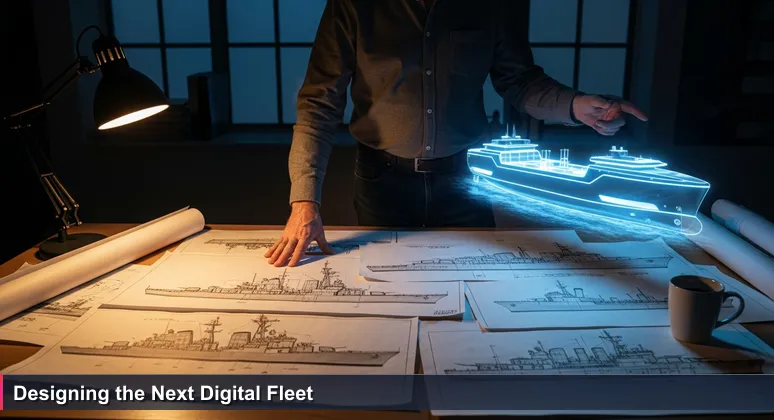
The most critical decisions in a shipyard aren't made at the launch, but in the quiet office hours, staring at blueprints for a future fleet. This is the precise tension shaping Virginia Beach's emerging technology landscape. By 2026, the Hampton Roads corridor has solidified its position as a specialized "digital gateway," leveraging the world's largest subsea fiber optic cable capacity not to replicate Silicon Valley, but to retrofit artificial intelligence onto its own industrial keel.
This ecosystem is fueled by the region's foundational sectors: defense, maritime logistics, and complex regulatory environments. A steady talent pipeline from institutions like Old Dominion University provides the human capital, while new financial instruments like the Virginia Innovation Partnership Corporation's (VIPC) $100M fund partnership provide the fuel. The result is a new class of startups building vessels uniquely designed for these local waters, solving problems born from the shipyard, the naval base, and the hospital.
The impact is moving beyond potential into measurable transformation. Expert analysis suggests a third of local jobs will be reshaped by AI-driven efficiency, creating a pressing need for a skilled workforce. For technologists and investors, the most promising ventures are those fundamentally built by and for the unique industrial landscape of this coastal digital hub.
Table of Contents
- Virginia Beach's AI Ecosystem Takes Shape
- Kilsar
- DroneUp
- Mercurial AI
- ZASTI
- SalesE
- FibrX
- Intellean
- Secret Chord Laboratories
- Joy of Wine Co.
- Qrblox
- Navigating the New Digital Currents
- Frequently Asked Questions
Navigate the AI job market in Hampton Roads with expert insights from this guide.
Kilsar
In the skilled trades that form the backbone of Hampton Roads' defense industrial base, the erosion of veteran "tribal knowledge" presents a critical threat to readiness and sustainment. Virginia Beach-founded Kilsar addresses this directly with its Orion platform, which uses deep learning to digitize expert knowledge in aviation, welding, and shipboard machinery maintenance.
Founded in 2021 by Brendan Lawlor and Zach Casey, Kilsar converts point-of-view video and 3D renders into AI-enriched, standardized workflows. This enables junior technicians at major local employers like Huntington Ingalls Industries to diagnose and repair complex systems with veteran-level accuracy. The startup has secured significant traction, with over $3.8 million in funding as of late 2025 from backers including Cotulla Capital and Lighthouse Labs.
With active deployments already underway, Kilsar’s deep alignment with the Pentagon's sustainment priorities positions it as a prime candidate for strategic partnership or acquisition. Its growth is a central example of how Virginia Beach is growing as a specialized tech and AI hub, building essential tools for the region's core industries. The company's use of synthetic data annotation to accelerate workforce training further demonstrates its tailored, practical approach to a pervasive local challenge. As covered by local news, their progress is being closely watched.
DroneUp
Managing the chaotic, three-dimensional traffic of modern logistics requires a new kind of air traffic control. While DroneUp is a larger scale-up, its Virginia Beach-headquartered AI Systems Division represents a major regional tech employer and a cornerstone of the area's autonomous systems cluster. Its core innovation is an "always-on" AI pilot management platform built for massive, complex unmanned aerial system (UAS) operations.
The system is engineered for extreme scale, having been load-tested to coordinate over one million simultaneous autonomous missions. It uses artificial intelligence for real-time airspace deconfliction, dynamic route optimization, and intelligent mission planning, transforming last-mile delivery and inventory management. This capability is proven through large-scale commercial partnerships, most notably with retail giant Walmart, demonstrating clear commercial viability.
Looking forward, DroneUp’s technology is a dual-use gem with significant implications for Hampton Roads. As military interest in swarm logistics and autonomous resupply grows, the division’s proven platform could become indispensable. Its presence anchors a growing ecosystem, as seen by the selection of other drone and autonomy-focused startups for programs like the downtown Norfolk accelerator. This positions the AI division not just as a business unit, but as a critical regional asset that could be spun out or serve as the foundational infrastructure for next-generation defense and commercial logistics, treating coordinated airspace as a new maritime domain.
Mercurial AI
Within the intense, emotionally charged journey of cancer treatment, patients and clinicians face a critical bottleneck: managing complex protocols outside the clinic. Norfolk-based Mercurial AI, a member of the 757 Accelerate 2026 Cohort, built a voice-first oncology copilot to navigate this challenge. It uses natural language processing and generative AI to provide real-time, conversational guidance, helping patients manage symptoms, medication schedules, and emotional hurdles.
This approach directly addresses administrative burnout and patient adherence, a high-stakes problem for the region's robust healthcare sector anchored by providers like Sentara Healthcare. By offering a constant, intelligently responsive companion, Mercurial AI aims to improve outcomes and quality of life during treatment cycles. Its development within the local Norfolk Innovation Corridor ecosystem highlights how Hampton Roads is applying AI to its strong institutional pillars.
The startup’s success in this high-value niche could position it as an essential partner for oncology centers nationwide, making it an attractive acquisition target for larger health-tech platforms seeking to deepen patient engagement tools. It represents a clear example of AI being deployed not for novelty, but for tangible human impact in one of the region's most vital sectors.
ZASTI
Industrial operations and insurance underwriting share a common vulnerability: legacy, unstructured data that hides patterns of failure and risk. Virginia Beach-based ZASTI tackles this with a proprietary deep learning platform that analyzes these complex datasets to identify subtle anomalies and predictive patterns, enabling a shift from reactive to proactive management.
ZASTI's technology serves a dual purpose. For industrial clients in the region's heavy manufacturing and maritime sectors, it provides predictive diagnostics to cut costly downtime. For insurers, it offers a sophisticated tool to more accurately price risk based on operational data. The startup has validated its approach with prior backing from programs like SBC InsurTech London, establishing credibility in a data-intensive field.
This focus makes ZASTI a archetypal Hampton Roads AI venture. Its platform is a dual-use asset, equally applicable to monitoring private sector machinery and public-sector infrastructure like bridges or naval facilities. By extracting actionable intelligence from chaos, ZASTI directly supports the predictive maintenance and risk mitigation needs that are paramount across the region's core industrial and defense economy.
SalesE
For the manufacturing and distribution companies that form the backbone of the Hampton Roads economy, manual sales workflows act as a drag on business velocity. SalesE, a local tech firm, applies AI-driven workflow automation to take over repetitive data-entry and lead-qualification tasks, freeing sales teams to focus on high-touch customer relationships and complex problem-solving.
The startup's practical approach to modernizing traditional industries gained significant validation in 2025 when it secured a $75,000 Commonwealth Commercialization Fund (CCF) grant from the Virginia Innovation Partnership Corporation (VIPC). This funding, as reported by Innovate Hampton Roads, is fueling its expansion across Virginia and positioning it as a catalyst for digital transformation in foundational sectors.
SalesE exemplifies the broader trend where AI is being pragmatically deployed to retrofit existing businesses, not just create new ones. Its potential lies in becoming a key vertical SaaS player for industrial markets across the Southeast, helping to modernize the region's economic fleet. This aligns with expert observations that AI-driven efficiency is transforming a significant portion of local jobs, making tools like SalesE's essential for competitive adaptation.
FibrX
The structural health of critical infrastructure - the bridges, pipelines, and ship hulls that form the region's industrial keel - has traditionally been monitored through costly, invasive, and periodic inspections. Norfolk-based FibrX, an early-stage company selected for the 757 Accelerate program in early 2026, leverages a transformative insight: existing fiber optic cables can be repurposed as a continuous sensor network.
Their AI-powered computer vision system analyzes subtle light pattern changes within these cables to detect anomalies, strains, or intrusions, providing 24/7 monitoring without installing new hardware. This capital-efficient model is a potential game-changer for public works departments and defense infrastructure managers, offering massive savings over traditional methods.
For Hampton Roads, the application is particularly resonant. The technology presents a powerful tool for the Navy's facility management at installations like Naval Station Norfolk and for the Virginia Department of Transportation. By turning the region's vast subsea and terrestrial fiber optic network into a sentient nervous system, FibrX exemplifies building smartly upon existing local assets to solve foundational problems.
Intellean
In industries governed by dense regulations - from shipbuilding to government contracting - manual document review is a slow, high-risk endeavor. Launched in late 2025, Virginia Beach's Intellean uses artificial intelligence to parse thousands of pages of codes, regulations, and contracts to extract actionable intelligence, aiming to drastically reduce compliance risk.
Its differentiator is a visual node interface that allows users to query complex document sets and receive pinpointed answers in seconds, transforming a task of weeks into one of moments. This targets the "non-negotiable" compliance environments where error costs are extreme, such as federal acquisition rules or maritime safety standards.
Intellean's potential hinges on achieving flawless accuracy, a challenge in the nuanced world of legal and technical language. However, perfecting this technology would make the startup indispensable within Hampton Roads' ecosystem. As a listed entity in the directory of Virginia Beach companies, it represents the type of deep-tech solution emerging from the region. Success here means providing the navigational charts for the complex regulatory waters that local defense contractors, manufacturers, and healthcare systems must constantly sail.
Secret Chord Laboratories
Amidst Virginia Beach's focus on defense and logistics, Secret Chord Laboratories represents a compelling departure: the creative diversification of the region's tech scene. This startup operates at the unique intersection of neuroscience and machine listening, using a cloud-based platform to analyze how the human brain processes sound in order to forecast a musical track's commercial and emotional impact.
Founded by a team of neuroscientists and music industry veterans, the company gives creators and labels a data-driven tool to reduce the financial gamble of production and marketing. While a niche play compared to industrial AI, its presence is notable. It is recognized among the top startups in Virginia Beach, signaling a broader, more varied innovation ecosystem.
In the generative AI era, where music can be created algorithmically, Secret Chord Labs' bio-data approach offers a distinct edge for evaluating content. This could make it a sought-after service for the global entertainment industry or a key differentiator for a music streaming platform. It proves that the region's digital shipyard can build vessels for more than just cargo and combat - it can also craft tools for navigating the uncertain currents of creative commerce.
Joy of Wine Co.
For businesses in the tightly regulated alcohol beverage industry, manual compliance reporting is a labyrinthine and costly chore. Virginia Beach's Joy of Wine Co. tackles this with vertical AI, developing its flagship product, Compliance Vine™, to automate state and county regulatory reporting. The platform turns what was typically over 40 hours of manual spreadsheet work into a one-click process.
The startup's value proposition is sharply quantified, claiming an average of $160,000 in annual savings per customer with a remarkable 21-day payback period. This focus on a hyper-specific vertical, noted in analyses of the region's startup landscape, demonstrates how AI can create dominance by solving a single, painful problem exceptionally well. As a 2026 participant in the Lighthouse Network Accelerator, the company is actively refining its model within the local support ecosystem.
Joy of Wine Co. exemplifies a potent startup strategy: deep specialization. By becoming the definitive tool for navigating the complex regulatory channels of its industry, it positions itself as a likely acquisition target for a larger point-of-sale or hospitality software company seeking to embed best-in-class compliance automation, proving that even niche markets in Hampton Roads can anchor significant technological innovation.
Qrblox
The humble QR code, often just a static gateway to a website, represents a missed opportunity for deeper engagement. Virginia Beach's Qrblox aims to redefine this interaction by infusing generative AI into the technology. Scanning a Qrblox code opens an intelligent chat interface, allowing users to interact conversationally with a brand, product, or even a piece of artwork to get instant summaries, support, or personalized information.
This startup is betting on the next evolution of physical-digital interaction, transforming QR codes from simple links into interactive agents. Its approach is noted among the innovative companies emerging in the area, as seen in directories of Virginia Beach startups. Success depends on driving widespread adoption by marketers and retailers, but the potential to create richer customer experiences is significant.
For the Hampton Roads economy, with its strong retail and coastal tourism sectors, Qrblox's technology offers a novel tool to enhance visitor engagement and point-of-sale interaction. If adopted, it could help define a new standard for customer connection, illustrating how the region's tech ecosystem is also crafting tools for the consumer-facing side of its diverse economy, not just its industrial base.
Navigating the New Digital Currents
The startups rising in Virginia Beach are not building generic AI; they are naval architects for the digital age, designing solutions for the specific depths and currents of the Hampton Roads economy. They leverage the region's defense assets, maritime logistics, and complex regulatory environments as both a proving ground and a launchpad, creating a fleet of specialized technologies retrofitted to the local industrial keel.
The impact is transitioning from potential to measurable reality. As noted by local strategist Dr. Barbara H. Smith, "AI is not the future, it is right now" in transforming the corporate landscape. This is supported by analysis suggesting a third of local jobs will be reshaped by AI-driven efficiency, underscoring the profound workforce transition underway.
Fueled by a steady talent pipeline and catalytic capital like the VIPC's $100M fund, this ecosystem demonstrates that the most promising ventures are those fundamentally built by and for the unique landscape of this digital gateway. For investors and technologists, the message is clear: the future here is being built not by copying other hubs, but by mastering the art of sailing these home waters.
Frequently Asked Questions
How did you choose which AI startups to feature for Virginia Beach in 2026?
We selected startups based on their alignment with Hampton Roads' key industries like defense and healthcare, along with their traction from funding or partnerships. For instance, Kilsar has raised over $3.8 million and collaborates with local giants like Huntington Ingalls Industries, demonstrating real-world impact.
What makes Virginia Beach a better place for AI startups than other tech hubs?
Virginia Beach offers unique advantages like a lower cost of living, proximity to major employers such as the U.S. Navy, and a growing tech ecosystem fueled by talent from universities like Old Dominion University. This allows startups to build specialized AI solutions for defense and maritime sectors without the high expenses of coastal tech hubs.
Are there investment opportunities in these AI startups for local residents?
Yes, many startups are actively seeking funding, supported by initiatives like the Virginia Innovation Partnership Corporation's $100M fund. For example, SalesE secured a Commonwealth Commercialization Fund grant, making it easier for investors to back early-stage ventures in the region.
How can tech professionals in Hampton Roads benefit from these AI startups?
These startups are creating high-demand roles in AI and machine learning, with competitive salaries tailored to the local market. The steady talent pipeline from schools like Hampton University ensures opportunities for growth in fields like predictive maintenance and autonomous systems.
Why are so many of these startups focused on defense and maritime applications?
Virginia Beach's strong defense and maritime sectors, including major employers like naval installations and Huntington Ingalls Industries, provide a natural testing ground. Startups like FibrX and ZASTI leverage this environment to develop AI solutions for infrastructure monitoring and industrial operations, ensuring relevance and scalability.
Find out which industries beyond Big Tech seek AI talent in Virginia Beach according to recent analysis.
For Virginia Beach AI bootcamp rankings aligned with local industries, read this article.
This resource covers free digital literacy and coding courses in VA Beach for 2026.
For insights on tech startups in Virginia Beach for junior developers, refer to this comprehensive guide.
This guide offers a detailed list of tech coworking and incubation options in Virginia Beach for 2026.

Irene Holden
Operations Manager
Former Microsoft Education and Learning Futures Group team member, Irene now oversees instructors at Nucamp while writing about everything tech - from careers to coding bootcamps.