






Is Fresno, CA a Good City for a Tech Career in 2026?
By Irene Holden
Last Updated: March 6th 2026
Quick Explanation
Yes, Fresno is a good city for a tech career in 2026 if you specialize in growing fields like AgTech or work remotely. Tech salaries here, with a median around $134,000 for software engineers, stretch much further thanks to housing costs 35-50% lower than in coastal California metros, making homeownership achievable. Fresno's resilient job market, driven by core industries and remote worker migration, offers a practical path to a balanced California lifestyle.
The collapse of the former "tech darling" Bitwise Industries, whose founders reported to federal prison in March 2025, left a vacuum. In its place, a more authentic and specialized bifurcated economy has taken root. Fresno’s tech identity is not a Silicon Valley clone; it is a strategic alternative built on two dominant, parallel paths.
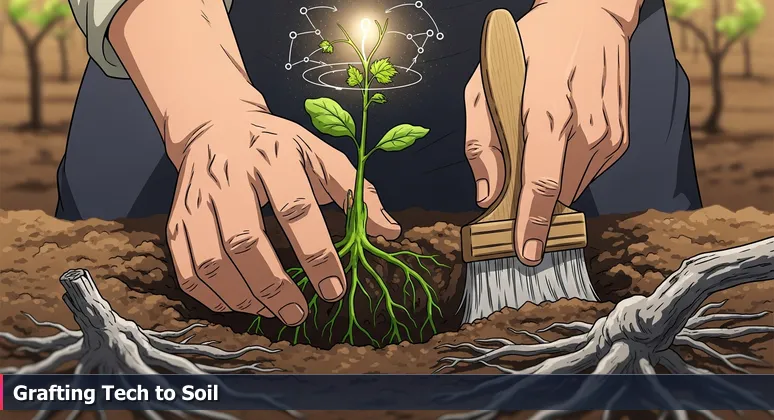
The first is its emergence as a world-leading hub for Agricultural Technology. This is a direct graft of innovation onto the region's fundamental strength: Fresno County consistently ranks as the nation’s top agricultural producer, generating over $8 billion annually. Momentum is tangible, fueled by initiatives like the Farms, Food & Future (F3) program, which secured over $120 million in federal funding between 2022 and 2024 to accelerate tech integration. This is showcased at events like FIRA USA, where innovations from companies like GUSS Robotics and WiseConn dominate, as highlighted in AgNet West's coverage of the 2025 event.
The second pillar is its role as a premier zoom-town for remote tech workers. A GV Wire report noted that Fresno-Madera led California in job growth in early 2025, driven in part by this migration. This creates a unique cohort of talent whose paychecks are calibrated to coastal economies but whose cost of living - and life - is firmly planted in the Central Valley.
What We Cover
- Fresno's Bifurcated Tech Economy in 2026
- Why Fresno Is a Game-Changer for Tech Careers
- Navigating Your Tech Career Path in Fresno
- Real-World Tech Careers in Fresno: Examples
- Upskilling for Fresno's Tech Market with Education
- Fresno vs. Other California Tech Hubs: A Comparison
- Who Should and Shouldn't Choose Fresno for Tech
- Conclusion: Fresno's Strategic Tech Future
- Common Questions
This guide explains how to train for an AI career in Fresno through local programs like Fresno State and bootcamps.
Why Fresno Is a Game-Changer for Tech Careers
Fresno recalibrates the broken equation of a California tech career by offering radical affordability amid broader economic uncertainty. While a state economist told The Mercury News to expect "no gangbuster year" in 2026 for advanced industries, Fresno’s lower cost structure provides a resilient buffer. Housing remains 35-50% cheaper than the Bay Area or Los Angeles, a strategic advantage explicitly acknowledged in the City of Fresno’s own 2024-2029 Comprehensive Economic Development Strategy.
This affordability translates directly into purchasing power and lifestyle. A mid-level software engineer at a local firm like Agrian or in healthcare IT might earn between $70,000 and $120,000. According to 2026 data from Glassdoor, the median total pay for this role in Fresno is approximately $134,105. While lower than coastal salaries, this income supports homeownership in neighborhoods like Clovis - a foundational dream that is largely unattainable elsewhere in the state.
For remote workers earning Bay Area salaries, the effect is transformative. A $160,000+ income in Fresno creates massive disposable income, enabling a quality of life - a single-family home with a yard, shorter commutes, and proximity to national parks - that redefines the California dream for a new generation of technologists.
Navigating Your Tech Career Path in Fresno
Succeeding in Fresno’s 2026 tech market requires a targeted strategy that grafts your skills onto the region's unique root industries. It's not about blasting out generic resumes but aligning with one of three viable paths.
Specialize in the Core Industries
The most direct route is to align with Fresno's economic pillars: AgTech, Health-Tech, and Logistics. Demand is strong for skills in IoT, data analytics, Python automation, and cybersecurity within these sectors. Major employers driving this demand include established companies like Community Medical Centers, Foster Farms, and Amazon's regional logistics centers, as well as AgTech innovators.
Master the Remote Work Strategy
This path involves securing a role with a coastal company while planting your life in the Valley. Success depends on having high-demand, demonstrable skills (like full-stack development or cloud architecture) that make remote management seamless. Building a local network remains crucial for professional support, a point often emphasized in community discussions among Fresno tech workers.
Build Your Own Venture in a Niche
The post-Bitwise landscape has cleared space for authentic, product-driven entrepreneurship. Support is centered on real engines like Fresno State’s WET Center and the F3 Innovate program, which creates a pipeline from university research to commercial venture. This ecosystem is ideal for founders solving tangible problems in agriculture, water, or logistics, as detailed on the F3 Initiative's news page.
Real-World Tech Careers in Fresno: Examples
Concrete examples from 2026 show how Fresno's specialized economy translates into meaningful tech roles. These aren't abstract positions but jobs solving the region's most pressing challenges.
Consider the Data Scientist working for an AgTech startup incubated at Fresno State's F3 Innovate program. They build predictive models using satellite imagery and soil sensor data to advise a Madera County almond grower on precise irrigation, directly tackling the critical issue of water conservation. Their office might be at the WET Center, and a hike in the Sierra foothills is a short drive away.
The Software Engineer represents the remote work pillar. They maintain a distributed cloud application for a San Jose SaaS company while living in Clovis. Their salary, which Glassdoor data shows can reach well over $130,000 locally, supports a mortgage on a 2,000 sq. ft. home with a yard - a lifestyle their coastal colleagues can't fathom.
Then there's the Cybersecurity Analyst on the IT security team for Valley Children's Healthcare. Their work protecting sensitive patient data and ensuring network compliance is mission-critical for a major regional institution, demonstrating the deep, steady demand within Fresno's robust healthcare sector.
Upskilling for Fresno's Tech Market with Education
For career changers and locals aiming to enter Fresno's specialized tech market, accessible upskilling provides the crucial graft between aspiration and opportunity. Affordable, focused education programs act as a strategic bridge into high-demand roles that don't require relocation.
University-led initiatives are foundational. Fresno State's Jordan College of Agricultural Sciences and Technology is a primary engine, with programs feeding directly into the AgTech pipeline through the F3 Innovate accelerator. This creates a direct line from academic research in water, energy, and technology to commercial ventures and jobs.
Coding bootcamps like Nucamp offer another viable path, teaching practical skills in backend development, data management, and AI essentials on flexible schedules. This model fits the reality of Valley residents who need to build competencies in Python for automation, data analytics, and AI integration without quitting their jobs. Such practical, affordable education directly feeds the talent pipeline for roles at local AgTech firms, healthcare systems, and logistics centers, where companies like Famous Software and BCT Consulting are actively hiring.
Fresno vs. Other California Tech Hubs: A Comparison
Fresno’s value becomes clearest when compared directly with California's established tech hubs. It doesn't compete on density but offers a compelling, specialized alternative. The table below breaks down the key trade-offs, positioning Fresno as a pragmatic choice within the state's broader tech landscape.
| Competing Hub | Fresno's Advantage | The Trade-Off |
|---|---|---|
| Bay Area (SF/San Jose) | Radical affordability (housing 35-50% cheaper), shorter commutes, and attainable homeownership. | Approximately 1/10th the local job density for pure-play tech roles; less serendipitous networking. |
| Sacramento | Undisputed leader in AgTech & water-tech specialization, with deeper roots in physical industries. | Less mature "gov-tech" and enterprise cloud sector anchored by state government. |
| Los Angeles / San Diego | Significantly lower barrier to homeownership, minimal commute stress, and immediate access to Sierra Nevada parks. | No entertainment-tech (LA) or major biotech (SD) clusters; fewer large corporate tech HQs. |
This comparison underscores that Fresno is a satellite and specialist, not a head-to-head competitor. As growth reports indicate, it attracts those prioritizing a recalibrated work-life equation. The choice hinges on whether an individual's skills and career goals align with Fresno's core industries and value proposition, as outlined in broader California labor market analyses.
Who Should and Shouldn't Choose Fresno for Tech
Fresno’s 2026 tech scene is a strategic fit, not a universal one. It excels for professionals whose priorities align with its unique grafting of innovation onto established industries.
Fresno is BEST for:
- Remote workers seeking California affiliation without coastal prices, who can leverage higher external salaries for local homeownership.
- Technologists fascinated by AgTech, water tech, or health-tech, who want to see their work impact physical industries and solve tangible problems.
- Career starters or changers who can use affordable education to enter fields with strong local demand, a trend noted in coverage of AgTech's draw for local students.
- Individuals and families prioritizing homeownership, outdoor access, and a shorter commute over dense urban amenities.
Fresno is NOT IDEAL for:
- Those seeking a frenetic venture capital scene, endless generic networking events, or the brand-name prestige of major FAANG offices. The scene is pragmatic, not glamorous.
- Job seekers who want to frequently switch between dozens of pure-play software companies without relocating. The local employer landscape is narrower and deeper.
- Anyone uncomfortable with the "bifurcated" economic reality, where remote and local workers may have different financial experiences, a dynamic often discussed in local community forums.
Conclusion: Fresno's Strategic Tech Future
Fresno in 2026 represents a calculated, strategic graft for resilient growth in a tech career. The painful collapse of Bitwise served as a harsh lesson against importing a generic tech culture. What has emerged is more authentic: an ecosystem where innovation is grafted onto the sturdy rootstock of Central Valley agriculture, healthcare, and logistics.
This is not a silver-bullet destination but a viable alternative for the right professional. It offers a recalibrated California dream, defined not by a tiny apartment in a superstar city but by a meaningful career aligned with specialized industries like AgTech, a family home, and a gateway to the Sierra Nevada. For remote workers, AgTech data scientists, healthcare IT specialists, and pragmatic entrepreneurs, the math works.
As growth trends indicate, the region is drawing those who prioritize substance over spectacle. The tech career map is being redrawn around affordability, specialization, and quality of life. With its resilient, bifurcated economy, Fresno is firmly on it - a place where technology is cultivated to solve real-world problems, yielding sustainable success for those who belong there.
Common Questions
Is Fresno, CA a good city for a tech career in 2026?
Yes, but it depends on your focus. Fresno offers a resilient tech scene specialized in AgTech and remote work, with median software engineer salaries around $134,105 and housing costs 35-50% lower than coastal California. It's ideal for those seeking affordability and niche roles in industries like agriculture or healthcare.
What kind of tech jobs are most common in Fresno in 2026?
Fresno's tech jobs are heavily focused on Agricultural Technology (AgTech), health-tech, and logistics. With Fresno County as the nation's top agricultural producer, demand is high for roles in AI, data science for farming, and cybersecurity, supported by employers like Community Medical Centers and Amazon fulfillment centers.
How does Fresno's cost of living compare for tech workers?
Fresno is much more affordable, with housing prices 35-50% cheaper than the Bay Area or Los Angeles. This means tech salaries, like the median $134,105 for software engineers, go further, enabling homeownership and a better quality of life, especially for remote workers earning coastal pay.
Is Fresno a good place for remote tech workers?
Yes, Fresno is a top choice for remote tech workers. Many professionals keep high-paying jobs from Silicon Valley or Los Angeles while enjoying lower living costs, driving local demand and community growth. This has made Fresno a hub for 'Bay Area refugees' seeking homeownership and outdoor access.
How does Fresno's tech scene stack up against Silicon Valley?
Fresno is a strategic alternative, not a direct competitor. It excels in specialized fields like AgTech and offers radical affordability, but has fewer pure tech companies compared to Silicon Valley. It's best for those prioritizing homeownership, niche industries, and a slower pace over big-city networking.
For those interested in AI bootcamps in Fresno, this article provides a comprehensive ranking.
This article provides insights on balancing cost of living and tech income in Fresno for financial planning.
Check out this ranked list of Fresno's AI startups for insights into the local tech scene.
For a breakdown of Fresno AI salaries by experience level in 2026, refer to this in-depth analysis.
Discover Fresno-specific tech training funding options for 2026 in our detailed article.

Irene Holden
Operations Manager
Former Microsoft Education and Learning Futures Group team member, Irene now oversees instructors at Nucamp while writing about everything tech - from careers to coding bootcamps.