


Is Raleigh, NC a Good City for a Tech Career in 2026?
By Irene Holden
Last Updated: March 21st 2026
Quick Explanation
Yes, Raleigh, NC is a strong choice for a tech career in 2026, thanks to its resilient ecosystem anchored by Research Triangle Park and top universities like NC State and Duke. With an average tech wage of $122,435 and a median home price around $425,000, it offers excellent salaries and affordable living, while the booming AI sector creates high demand for skilled professionals in machine learning and data science.
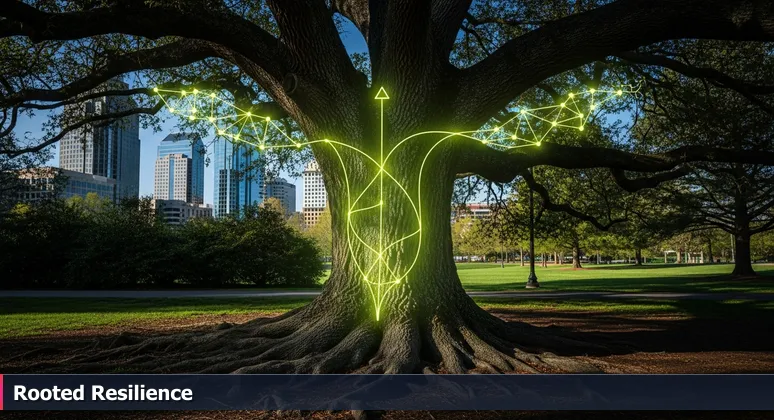
That iconic oak tree in a Raleigh park, with its ancient roots and new green shoots, is the perfect symbol for the region's tech career landscape. It represents an ecosystem built on decades of stability that now fosters remarkable adaptation. For professionals, this means a market less susceptible to boom-and-bust cycles and more capable of sustained, intelligent growth.
The foundation isn't new; it's the deep, interlocking system of world-class universities and the corporate anchors of Research Triangle Park. This combination has created a talent-rich environment where over half of adults hold a bachelor's degree, feeding a tech workforce that grew by 15.4% from 2021 to 2024. Recognition of this resilience is national, with the Milken Institute naming it the #1 best-performing large metropolitan area in the U.S. in 2025.
In 2026, this resilience is being tested and proven by the wave of artificial intelligence. While analysis suggests approximately 60% of tech jobs in the state could be heavily impacted by AI, the key insight for Raleigh is that the disruption creates demand for new skills. As noted in an NC Tech analysis, AI is "reshaping tasks and productivity expectations far faster than it is replacing professions." The ecosystem is adapting, with its roots providing the stability needed to weather the change and its new growth targeting the opportunities AI creates.
What We Cover
- The Resilient Tech Ecosystem of Raleigh
- Deep Roots in Research Triangle Park
- AI and Startup Boom in Urban Raleigh
- Navigating the 2026 Tech Market Challenges
- Quality of Life and Affordability in Raleigh
- Raleigh vs. Durham: Choosing Your Triangle Hub
- Is Raleigh the Right Tech City for You?
- The Verdict on Raleigh's Tech Future
- Common Questions
Discover how to launch an AI career in Raleigh, NC in 2026 with step-by-step advice from industry experts.
Deep Roots in Research Triangle Park
The 7,000-acre Research Triangle Park (RTP) is the literal and figurative ground from which Raleigh's tech ecosystem grows. For decades, this dedicated research park between Raleigh and Durham has been home to the campuses of legacy giants like IBM, Cisco, and SAS Institute, forming a bedrock of high-skilled, stable employment and institutional knowledge. These are the deep roots that anchor the region's economy.
This corporate stability is fed by a powerful and perennial talent pipeline. The concentration of NC State University, Duke University, and UNC-Chapel Hill creates a unique brainpower hub. The result is a workforce where over 51% of adults hold a bachelor’s degree or higher, as detailed in a Wake County Economic Development analysis. This means the region doesn't just import talent; it cultivates it continuously, creating a self-reinforcing cycle of innovation.
The scale is immense, with RTP hosting over 55,000 employees across hundreds of companies. This critical mass of research, development, and corporate investment is a primary reason the Raleigh metro area was named the nation's #1 best-performing large metropolitan area by the Milken Institute. It provides the resilient foundation upon which all new growth - from AI startups to urban tech cores - can securely build.
AI and Startup Boom in Urban Raleigh
While RTP remains the foundational root system, the most vibrant new growth is happening in Raleigh's walkable urban cores. Companies are increasingly choosing downtown locations to attract talent seeking city energy, creating a distributed "Triangle" ecosystem. This shift is exemplified by Red Hat anchoring downtown Raleigh and SaaS leader Pendo growing as a prominent late-stage startup.
The most potent force within this urban boom is artificial intelligence. Leveraging the academic firepower of nearby universities, Raleigh-Durham is a leader in the AI wave, where demand for AI-skilled talent in North America grew by over 50% year-over-year. This drives high-level recruitment, with firms like Qualcomm actively recruiting for 2026 Machine Learning and AI Engineering internships in the area, connecting directly to the local talent pipeline.
"It's a city where individuals aspire not only to work but also to reside." - Tami Newcombe, President and CEO of Ralliant, on opening her company's global headquarters in Raleigh.
This sentiment, captured by WRAL, underscores the urban appeal. The synergy of education, business community, and lifestyle is attracting technology-driven organizations focused on growth, ensuring the new shoots of innovation continue to flourish within the city's vibrant canopy.
Navigating the 2026 Tech Market Challenges
No ecosystem is immune to harsh weather. Raleigh's tech scene faced headwinds in 2025, including layoffs at firms like RTI International, which cut over 500 jobs due to federal funding shifts, and reductions at Lenovo. This reflected national trends and has contributed to a 2026 hiring climate described as "deliberate," with companies focusing on roles that drive immediate value.
The most significant storm cloud - and simultaneously, the greatest opportunity - is AI's disruptive force. A Business North Carolina analysis suggests approximately 60% of tech jobs in the state could be "heavily impacted" by AI in 2026. The critical insight for career seekers is understanding this impact as transformation rather than simple elimination.
As an NC Tech blog on Enterprise AI clarifies, AI is "reshaping tasks and productivity expectations far faster than it is replacing professions." In Raleigh, this translates to demand for professionals who can leverage AI tools, not just fear them. The underlying resilience is clear: even with volatility, the regional tech workforce itself grew to over 76,000 professionals, showing robust capacity to adapt.
Quality of Life and Affordability in Raleigh
The "City of Oaks" nickname reflects more than just tree-lined streets; it signifies a coveted quality of life that forms a protective canopy over your career. Raleigh offers extensive greenways, manageable commutes, and a family-friendly environment that consistently earns top rankings, including its designation as the nation's #1 best-performing large metro by the Milken Institute. This livability is powered by the region's most compelling economic advantage: radical balance.
While the average annual tech wage in the region is a healthy $122,435, the cost of living provides exceptional purchasing power. The median home price in Raleigh is approximately $425,000, a stark contrast to the $1.45 million median in San Francisco. This financial balance transforms a tech salary from mere compensation into a tool for building wealth and stability.
According to a MOD24 analysis of housing costs, Raleigh remains significantly more affordable than other major tech hubs. This means your earnings go much further, enabling realities like homeownership, substantial savings, and a discretionary lifestyle that are often out of reach in coastal cities, making Raleigh not just a place to work, but a place to truly live.
Raleigh vs. Durham: Choosing Your Triangle Hub
When evaluating "Raleigh" for a tech career, it's essential to think of the integrated "Triangle" job market encompassing Raleigh, Durham, and Chapel Hill. Your daily experience is defined by which part of this triad you work and live in, each with a distinct character. This shift from a single suburban park to a distributed network of urban cores is a key reason analysts bet on the region's growth.
- Downtown Raleigh: Urban and walkable, anchored by Red Hat and Pendo. Ideal for those seeking a classic city feel with tech employers steps from restaurants and apartments.
- Research Triangle Park (RTP): The massive 7,000-acre suburban research park between Raleigh and Durham, home to IBM, Cisco, and surging biotech firms like Biogen. Requires a car but offers immense corporate stability.
- Durham: Known for a grittier, hip vibe, with a booming downtown anchored by the American Tobacco Campus and Google's engineering hub.
Your choice ultimately depends on lifestyle. Many tech workers live in Raleigh (or the family-friendly suburb of Cary) and commute to RTP or Durham, with a 20-30 minute drive being standard. Furthermore, remote and hybrid policies remain common, softening geographic constraints. Firms like Red Hat maintain flexible "office-flex" models, allowing you to choose your hub based on culture, not just commute.
Is Raleigh the Right Tech City for You?
Choosing a tech hub is deeply personal. Raleigh's proposition isn't for everyone, but for specific professionals, it represents an unparalleled alignment of career opportunity and life quality. Your decision hinges on matching your priorities with the ecosystem's core strengths.
Raleigh is BEST for:
- AI & Machine Learning Professionals: The synergy between top universities, corporate R&D, and startups creates a rich environment. With approximately 60% of NC tech jobs potentially impacted by AI, demand for those who can leverage it is intense.
- Career-Changers & Bootcamp Grads: The strong corporate presence offers a clearer path for upskilled talent. Companies like BuildOps and Optum are noted in Built In's analysis for internal "academy" programs and high career growth potential.
- Families and Long-Term Planners: The combination of strong schools, affordable homeownership (median ~$425k), and a diversified economy is ideal for building a life.
- Those Escaping Coastal Hubs: If you want your salary to translate into tangible wealth, Raleigh's balance of wage and cost of living is transformative.
Raleigh might NOT be ideal for:
Those seeking only pre-seed startup chaos or 24/7 megacity energy may find the market too "deliberate." Crucially, as the NC TECH 2026 State of the Technology Industry Report confirms, anyone resistant to engaging with AI tools will struggle, as adaptation is non-negotiable in the region's forward path.
The Verdict on Raleigh's Tech Future
The verdict on Raleigh’s tech future is one of rooted resilience. In 2026, a career decision requires assessing an ecosystem's ability to support you through multiple seasons of technological and economic change. Raleigh’s proposition is powerful because it is a complete system: the deep, stable roots of RTP and world-class universities provide perpetual talent and stability, while the new growth of urban innovation and AI represents its dynamic, adaptive capacity.
External validation is consistent, from being named the nation's #1 best-performing large metro to maintaining over 76,000 tech professionals even amid industry volatility. The region doesn't just survive disruption; it evolves through it. The forecast that 60% of state tech jobs will be heavily impacted by AI isn't a threat here but a catalyst, driving demand for the very talent its universities produce and its companies need to harness what an NC Tech analysis calls the "hard reality" of enterprise AI.
Ultimately, Raleigh stands tall not as a city of fleeting hype, but of grounded, sustainable growth. For the tech professional looking to build a meaningful career and a balanced life within an ecosystem designed for what's next, the "City of Oaks" offers a canopy under which both can thrive for years to come.
Common Questions
Is Raleigh, NC actually worth considering for a tech career in 2026?
Yes, Raleigh offers a resilient tech ecosystem with deep roots in Research Triangle Park and world-class universities like NC State. It was named the #1 best-performing large metro by the Milken Institute in 2025, providing stability and growth opportunities for tech professionals.
What are tech salaries like in Raleigh, and how does the cost of living compare?
The average tech wage in Raleigh is $122,435, and with a median home price around $425,000, your income goes much further than in coastal hubs. A single adult needs about $53,663 to live comfortably here, making it an affordable option for building wealth.
How strong is the AI and machine learning job market in Raleigh?
Raleigh is a leader in AI, fueled by top universities and companies like SAS Institute, with demand for AI talent growing rapidly. The region's tech workforce increased by 15.4% from 2021 to 2024, and firms like Qualcomm are actively recruiting for AI roles in 2026.
Is the tech job market in Raleigh stable despite recent layoffs?
Yes, the market remains resilient with over 76,000 tech professionals and a 15.4% growth in recent years. While AI may impact 60% of tech jobs, it creates opportunities for those who adapt, supported by a diversified economy and deliberate hiring in high-value roles.
What's the daily commute and lifestyle like for tech workers in Raleigh?
Commutes are manageable, typically 20-30 minutes to RTP or Durham, with flexible remote options from companies like Red Hat. Raleigh offers a family-friendly environment with greenways and a lower cost of living, making it ideal for a balanced life compared to busier coastal cities.
Get insights on scholarships available for tech training in Raleigh for 2026 from local experts.
Our analysis of Raleigh's top startups for entry-level tech roles can help you decide.
Get insights on no-cost digital skills training in Raleigh from this post.
Learn about the top 10 tech jobs that don't require a degree in Raleigh, NC in 2026.
Find the best AI meetups in Raleigh for 2026 with this comprehensive resource.

Irene Holden
Operations Manager
Former Microsoft Education and Learning Futures Group team member, Irene now oversees instructors at Nucamp while writing about everything tech - from careers to coding bootcamps.